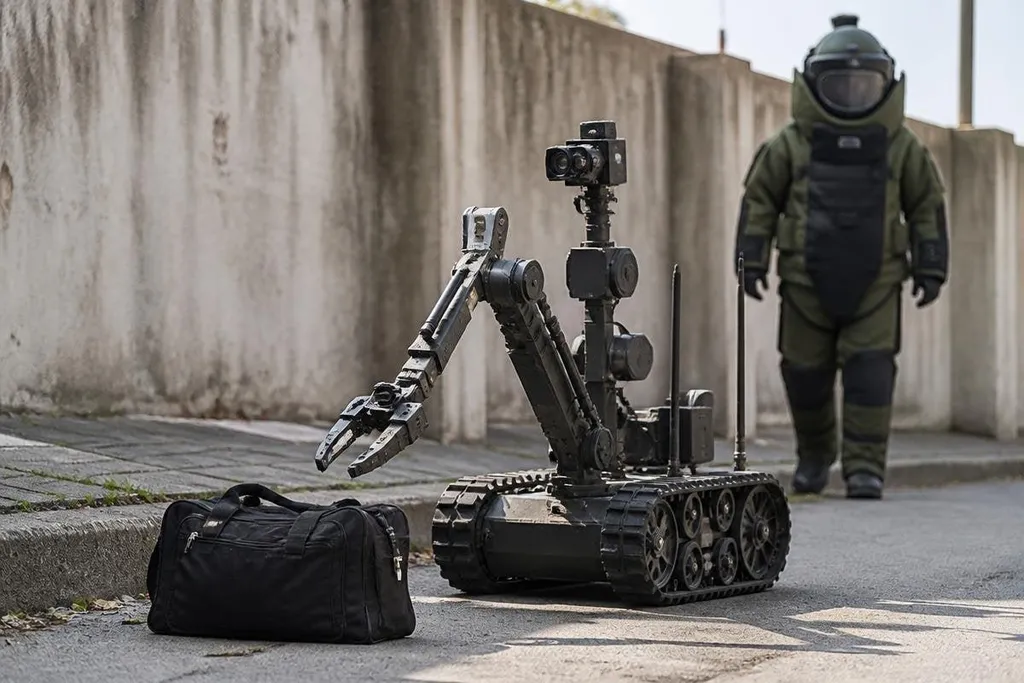
Bomb disposal robots are often described through demos, but no evidence pack was supplied for this article. That means a responsible ranking of the biggest changes would be guesswork, not reporting.
- No named robot, operator, test site, date, or result is available.
- A useful review must separate a lab demo from field work.
- The next step is to check the machine, task, control method, and outcome.
What a major claim needs
A bomb disposal robot can carry cameras, a manipulator arm, and tools for handling suspicious objects. Those features alone don't show a major change. The useful question is what changed during a real task, and how the change was measured.
A source should name the robot and explain the job it performed. It should say if the robot opened a container, moved an object, checked a vehicle, or worked in another setting. Without that detail, “bomb disposal” covers too many different jobs to support a fair comparison.
The source also needs a result. That could be a task completed without a person entering the danger area, a longer control distance, better camera visibility, or fewer failed attempts. The result must sit beside the test conditions, since a controlled indoor demo tells you less than a field trial with dust, poor light, blocked radio signals, or uneven ground.
The areas worth checking
The biggest gains may come from several parts of the system, but each claim needs its own proof.
A new arm matters if it gives the operator better control or lets the robot carry a tool that older systems couldn't handle. A new sensor matters if it helps identify an object under conditions the earlier sensor could not manage.
Control is another area to inspect. Remote operation can reduce exposure for the bomb technician, but the article would need evidence about the control link, delay, range, and failure response. An autonomous function needs even more care: the source should state what the robot did on its own and where a person remained in control.
A dated field report gives that test a place to start. Bomb disposal robotics coverage from Robot24.com puts the machine, test site, date, operator role, and recorded result beside the claim. You can then judge whether the reported advance changes bomb technicians’ work or only makes a demo look better.
A good source may show that the real advance was small but useful. A better camera, a tool that fits an existing arm, or a control change that reduces operator workload can matter more than a dramatic video. The size of the claim should match the size of the evidence.
What remains unproven
No supplied material supports a claim about the first, largest, fastest, safest, or most capable bomb disposal robot. No source identifies a company, public agency, research team, model number, deployment count, price, date, or measured task result.
That gap matters because bomb disposal work has strict consequences. A robot that handles one object in a test video may still struggle with a narrow doorway, a weak radio link, a heavy tool, or a task that needs careful contact. Those limits cannot be filled with assumptions.
I'd avoid calling any system a breakthrough until a named source shows the task, the conditions, and the result.
A practical check before publishing
Use this list to test each proposed claim:
- Name the system: record the maker, model, and version.
- Name the operator: identify the police unit, military team, lab, or company involved.
- Describe the task: state what the robot handled and where the work took place.
- Record the measure: include time, distance, success rate, payload, or another stated result.
- Separate demo from service: mark a video test, trial, purchase, and routine deployment as different evidence.
- Keep the limit: write down what the source did not test.
Once those details are available, the article can rank progress by use. A robot that reduces human exposure may matter more than one with a longer arm. A system that works through poor radio conditions may matter more than one shown only inside a clean test room.
The missing evidence decides the article's next move: gather named field results before naming the biggest bomb disposal robotics breakthrough.